

A customer slides into your shop.
No footsteps, no sound.
You can barely see them. Just a shimmer in the air; a faint outline where a person should be.
Are they even there?
They’re holding something you sold them last week.
They seem… upset? Disappointed? It’s hard to tell. Their face is a blur.
They say nothing. But they want something.
A return.
Okay.
You hold your breath. Close your eyes.
You silently take the item. Hand them the cash.
Not a word exchanged.
They drift towards the door, fading away.
Ghostly quiet.
Gone.
Bizarre.
Except… this is exactly how most startups handle churn.
A customer clicks “cancel”.
“Are you sure?”. “Confirm”.
Not a word exchanged. Not even a glance.
Gone.
If this were in person, you’d talk to them. You’d try to understand.
“What went wrong?”, “Do you want something else?”, “How can we fix it?”.
Why don’t startups do this?
There’s so much you can do with that moment of churn.
It starts with a simple question:
What made you cancel?
Brought to you by Churnkey. High-volume subscription businesses like Superhuman, Gamma, and Veed use Churnkey to reduce voluntary and involuntary churn. Churnkey helps save 20%-40% of subscription revenue that would otherwise be lost.
Listen
About 80% of churn is voluntary.
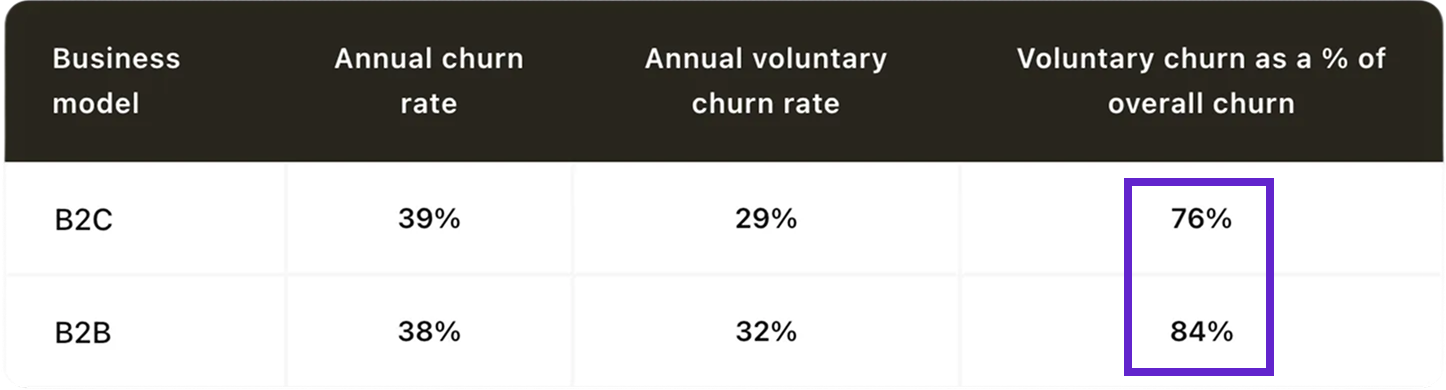
Customers are making a choice. Choosing to cancel, versus a failed payment or expired card.
You have their attention, even if just for a moment.
In that moment, ask: “What made you cancel?”1.
What they tell you is critical. You’ll use that information over and over. So let’s make that information high quality.
Provide buckets:
Too expensive2
Don’t need it anymore
Expectations not met
Prefer an alternative
Technical problems
Missing functionality
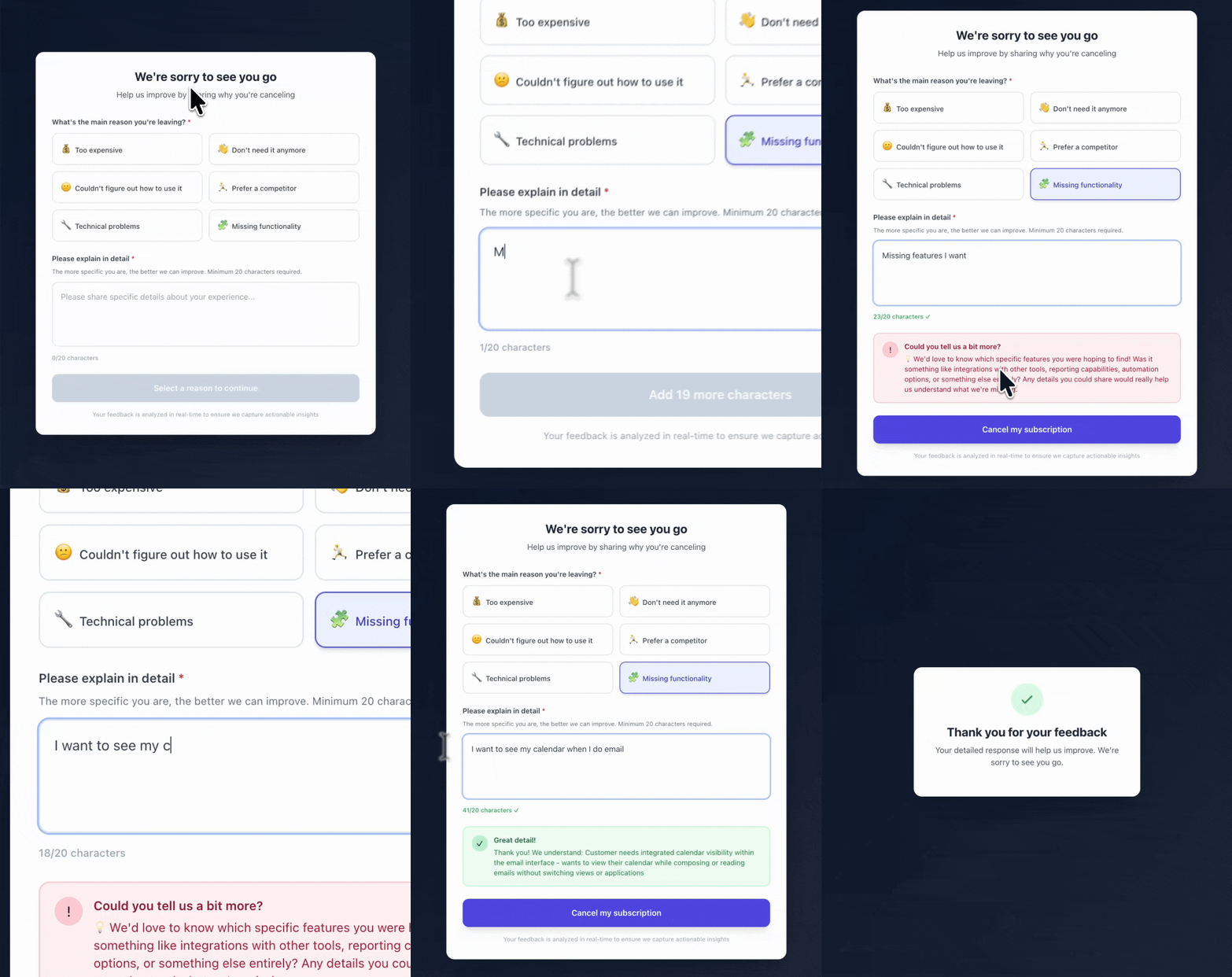
Then go beyond the bucket: ask for an explanation. Even better, require an explanation3.
Make it mandatory. Impose a minimum character limit.
Sure, haters will hate, complainers will complain.
But you and your customers will be better off with this info.
Of course, you’ll receive some nonsense. Terse, one-word answers. Straight up gibberish.
So: why not have AI scan in realtime? Check if the explanation was specific enough to act on, and if not, prompt for more detail4
Save
Now that you have detailed reasons, save as much as you can.
Companies using Churnkey see a median save rate of 18%. The top 10% see save rates above 26%. Some see save rates as high as 50%.
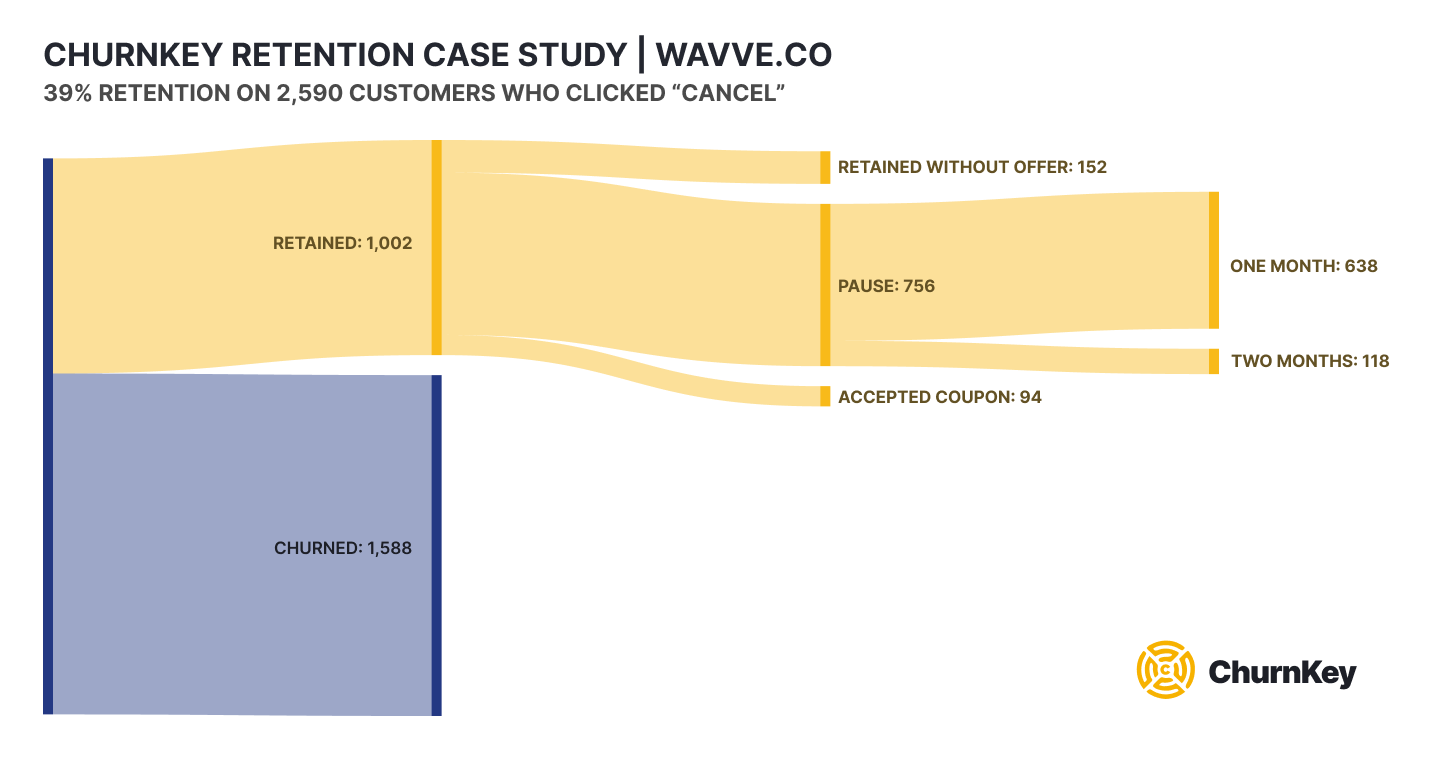
This starts with simple logic. For example:
The user says: Don’t need it anymore
You suggest: Pause subscription for one month
But again, why stop at basic, linear rules?
You’re already capturing reasons and detailed explanations. You already know the customer’s plan history, usage, location, and more. The customer is churning — it’s now or never.
Imagine the customer typed: “I’m a student and I don’t need this over summer”.
We know they’re on the student plan. We know they were a happy and engaged user.
A good offer might be a free month, but the best offer might let them pause for three months.
Avoid the hassle of reinventing the wheel. Use off-the-shelf solutions like Churnkey’s Adaptive Offers.
Synthesize
With maximum churn saved, go back to those reasons.
Now batch it into discrete areas. For example:
Engineering
Technical issues (bugs, failed flows, downtime)
Usability issues (performance, UI/UX)
Product
Use case not solved well enough
Entirely missing use case
Growth
Couldn’t reach value fast enough
Price didn’t match value
Marketing
Promising the wrong thing
Bringing in the wrong customers
Then assemble the information to answer:
What was the total amount of churn?
How much was successfully saved?
How did it break down by bucket? By ownership area?
What are the big changes versus last week?
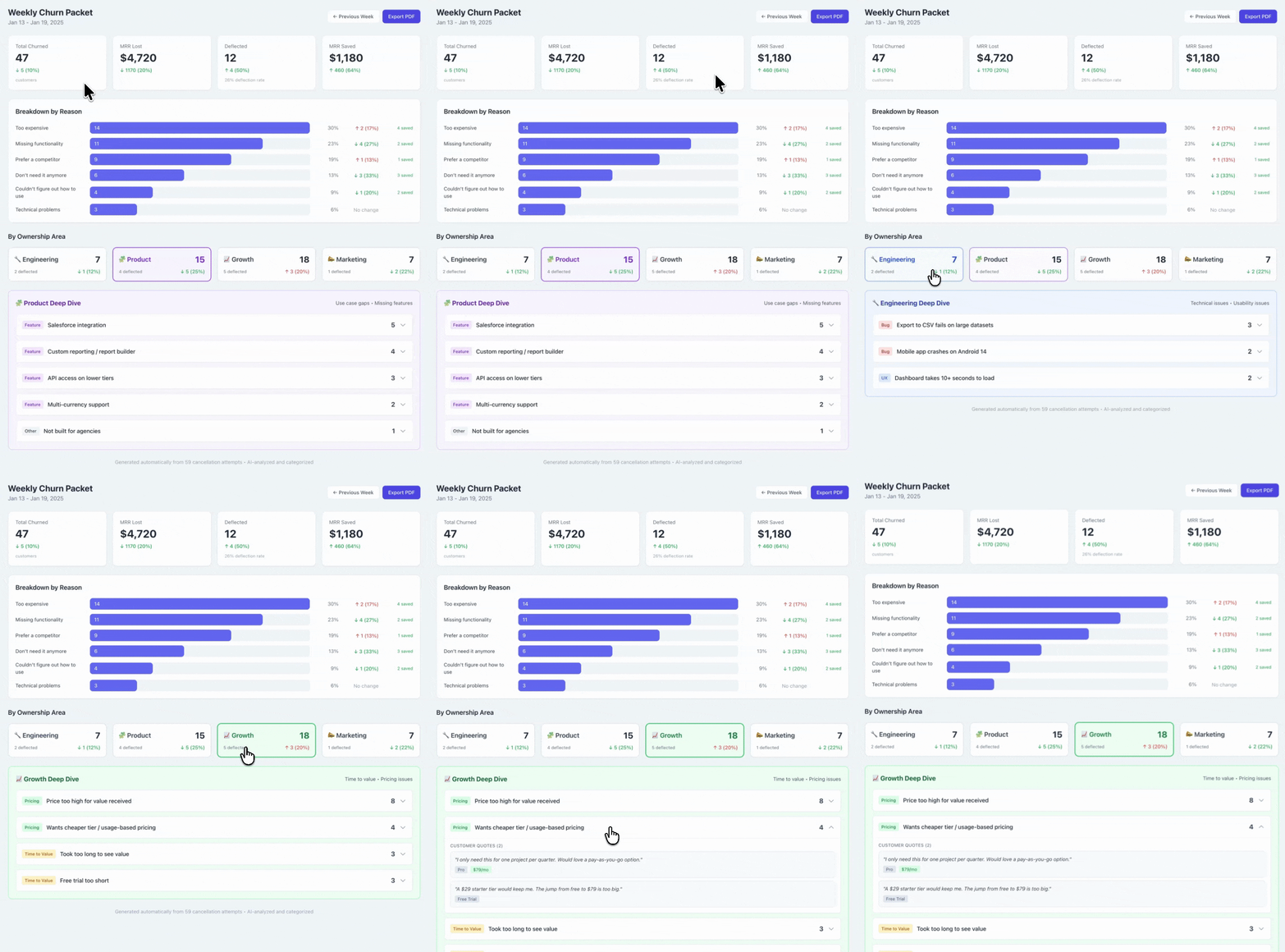
This packet should let you dig deep.
What were the specific features and issues? What were the exact customer quotes? Who were the exact customers?
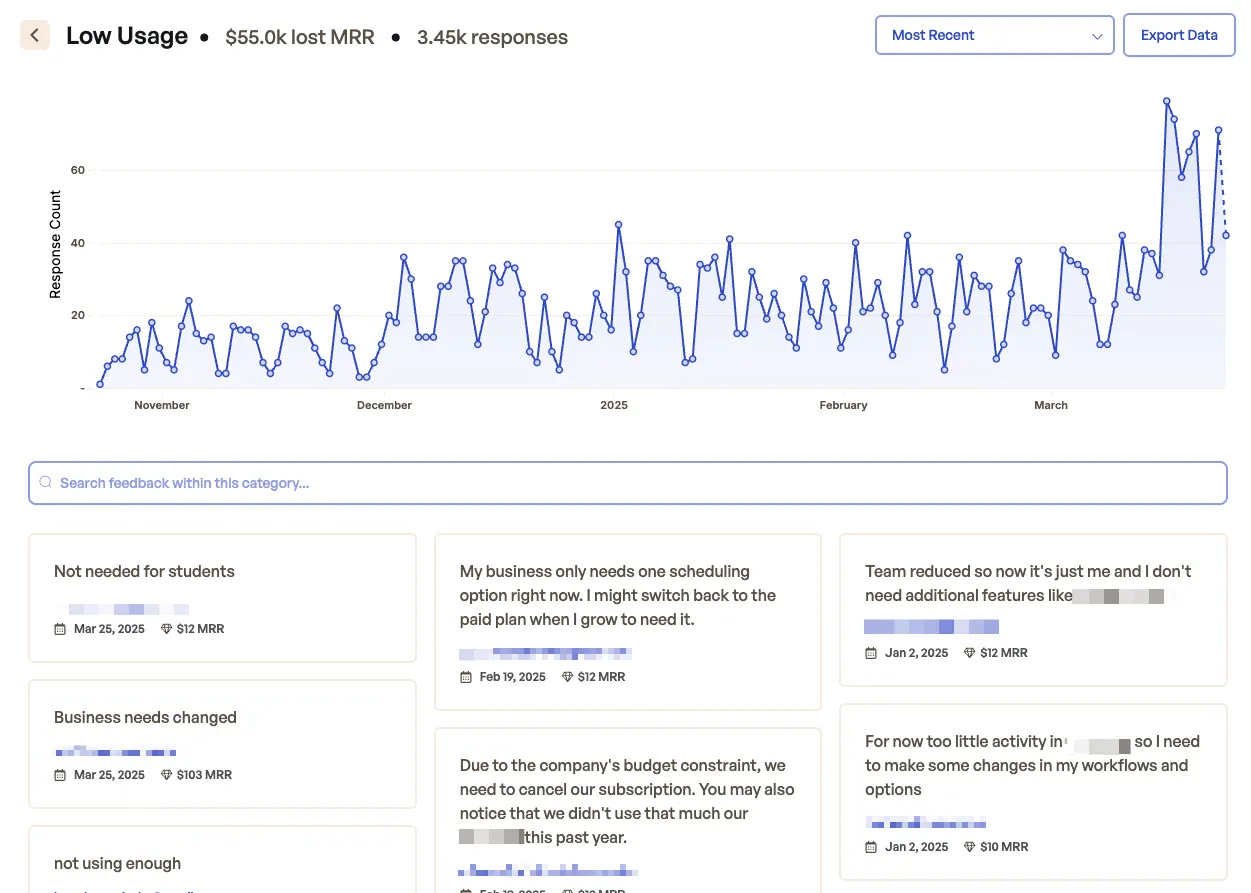
Act
The hardest part.
Most companies fail to act on churn.
I think the failure is two-part: a lack of information, and a lack of prioritization.
If you’ve followed the above, you should have near-perfect information.
But prioritization is genuinely hard.
So let me suggest a framework.
First: do you have PMF?
There are many definitions for PMF.
From “40%+ of customers say they’d be ‘very disappointed’ if your product disappeared tomorrow”, to “customers are buying the product as fast as you can make it”, to “customers are spontaneously telling other people about it”.
In the context of churn, if your retention curve relentlessly slopes towards 0%, you don’t have PMF:

If you see this, your only job is to get to PMF.
To get there faster, pay close attention to what churning customers are saying.
If you do have PMF, your retention curves will flatten.
Then you should ask: how hard is it to raise the point where that flattening happens?
If it’s quick and easy, just do it.
Every churn improvement benefits all current and future cohorts.
Meanwhile, leaving issues unfixed means burning through customers you’ll never get a second chance with. This hurts revenue and brand.
So: fix bugs. Adjust pricing. Ship features. All of it, sitting right there in your churn data.
Now you’re left with the hard stuff.
You have PMF. You’ve picked the low-hanging fruit.
But your churn data is surfacing gaps. Most likely these are product swings that need real investment.
This is where you shift from reacting to churn to channeling what you’re learning into product strategy.
How to build that strategy is beyond this piece.
But here’s an obvious truth: most companies make these decisions with far worse information than you now have.
You have a stream of customers telling you exactly why they left.
That’s gold. Use it.
Why doesn’t every company do this?
There’s no technology barrier.
It starts with one question: what made you cancel?
“What made you cancel?” is a better question than “Why did you cancel?”. Jason Cohen tested both phrasings, and found the former question doubles response quality.
From the same interview, “too expensive” is never the full explanation. Customers already saw and accepted your pricing, so something else changed. When customers cite price, uncover the real reason, such as unmet expectations, feature gaps, or changed needs.
Be aware that single-click cancellation laws (California, New York, EU, etc) mean you can't gate cancellation on a survey. But you can still ask for feedback as part of the flow.
Product owners agonize over whether to introduce ‘intrusive’ experiences like this. My rule of thumb: if something is ultimately in service of improving the customer experience, do it.
Great analysis! Which products do you think have the best Cancellation / Churn prevention flow? I saw Canva mentioned many times, but maybe there are some new examples out there :)